


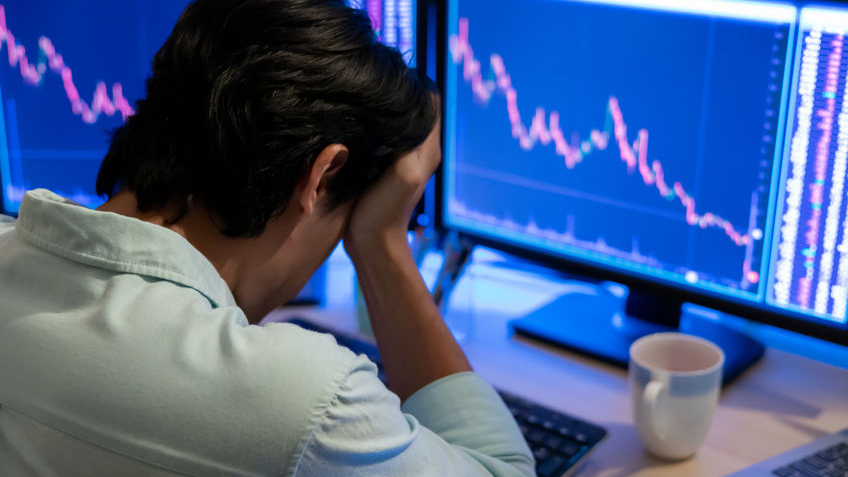
You may have come across advertisements or related discussions about Contract for Difference (CFD) on the internet, social media or discussion forums. CFD dealers usually have gimmicks such as low minimum investment amount, high leverage, flexibility in choosing long or short positions, quick profits, and 24-hour trading to allure investors. In fact, CFD trading is of a high level of risk. According to the figures of the Financial Conduct Authority of the U.K., approximately 80% of customers lose money when investing in CFD.
CFD involves extremely high risks
CFD is a leveraged product traded over the counter. Under a long or a short position contract, an investor and a dealer agree to exchange the difference in the open and closing prices of an underlying asset, such as stocks, indices, foreign exchange, commodities, virtual assets, etc. Investors do not own the underlying asset but maintain a long/short position of its price. CFDs are mostly targeted at professional investors.
CFDs are generally leveraged, or traded on margin, meaning an investor only needs to deposit a small percentage of the value of the trade in order to open a position. Leveraging could augment the profit, as much as it could magnify the loss. When the price of an underlying asset goes against an investor’s position, the investor may lose all of the margin; such loss may also exceed what is covered by the margin. An investor may get a margin call asking to inject more funds to maintain the position. If new funds are not added in time, the position may be forced to close. Besides, a CFD is a contract between an investor and a dealer, thus involving counterparty risk – if the dealer defaults or goes bankrupt, the investor may lose all the capital.
Cross-border risk of overseas dealers
In Hong Kong, if CFDs do not involve securities or futures as defined under the Securities and Futures Ordinance, companies that conduct the relevant activities may not be subject to the licensing regime of the Securities and Futures Commission (SFC), and therefore are not regulated by the SFC.
CFD dealers that have an online presence may be an overseas company, or one that is subject to the regulation of an overseas regulator. In the event of a dispute, investors would have to seek assistance or file complaints with an overseas regulator. As investors are physically in Hong Kong, making complaints or seeking assistance overseas could be difficult and complicated. If the dealer closes or ceases operations, investors may be fighting an uphill battle in submitting claims and seeking legal remedies. Because of the cross-border nature, the operations of such overseas dealers are not within the jurisdiction of the SFC even if the underlying asset of the CFD is related to the Hong Kong financial market. And the SFC does not have any statutory power to take action against them.
Investors taking part in CFD trading are exposed to extremely high risks but are not protected by existing laws. Furthermore, certain outlaws have set up bogus CFD trading platforms to commit frauds. Before making an investment, investors must conduct research to thoroughly understand the features and associated risks of a product. They should also carefully consider their personal circumstances and risk appetite, as well as to stay alert of scams.